
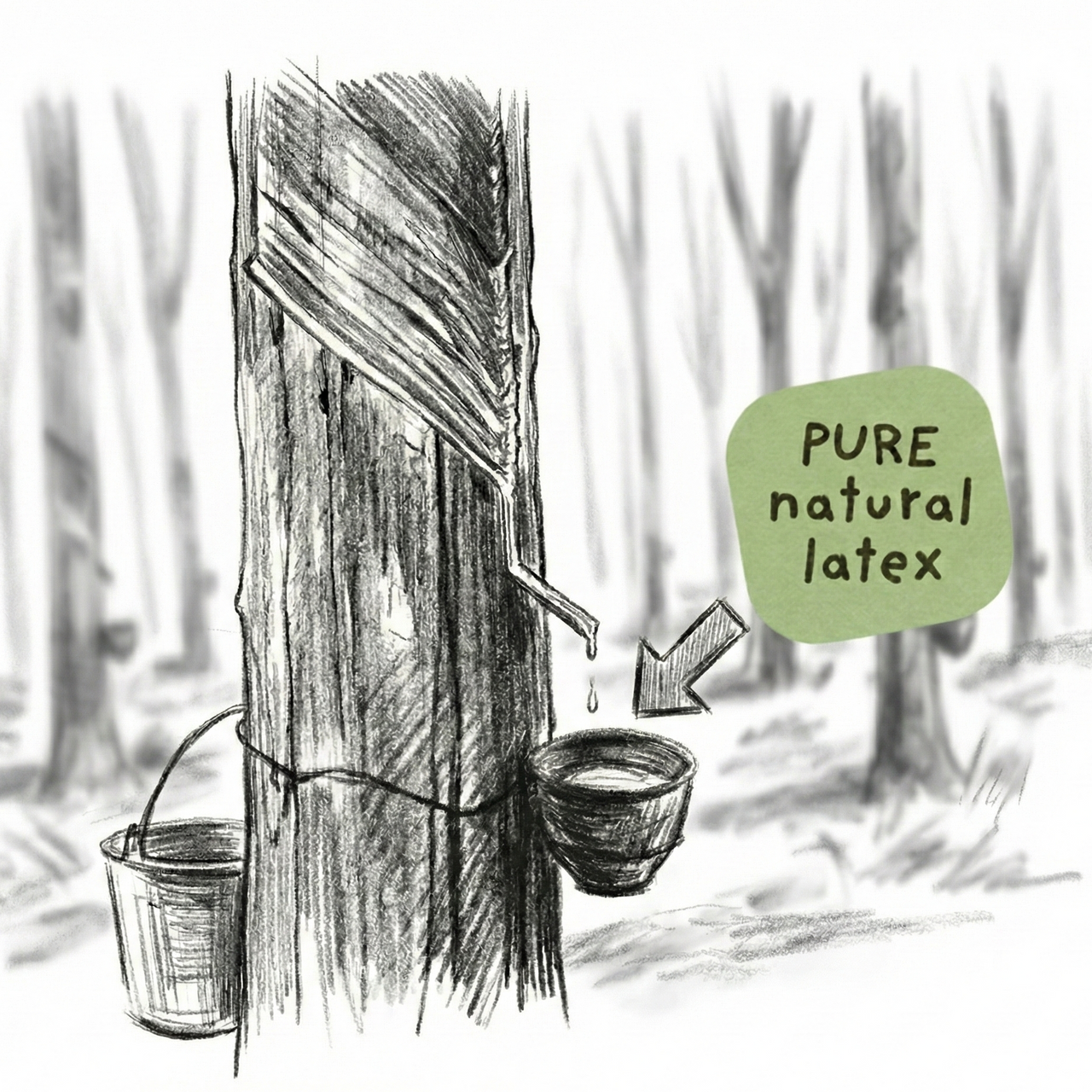
Our pacifiers come in one material only: natural rubber latex.
Here’s why we made that choice and what it means for you.
What Makes Natural Latex Special
Soft, flexible and familiar for babies.
-
Made from the sap of the Hevea tree
-
Very soft and elastic
-
Feels close to a natural nipple
-
Responds well to a baby’s sucking rhythm
-
Slight color variations are normal because it’s natural
Care: Pour boiling water over it and let it sit for 5 minutes. Don’t boil.
Replace: Every 4–6 weeks.
Why We Don’t Use Silicone
Silicone is allergy friendly, smell and taste neutral, and durable.
But it doesn’t offer the same soft feel or natural elasticity as latex.
For many babies, that difference matters.
We chose to focus on one material that aligns with what most babies prefer instead of splitting attention between two.
Natural Latex vs. Silicone at a Glance
Material
-
Natural latex: plant-based and very soft
-
Silicone: industrial and firmer
Feel
-
Latex: warm and elastic
-
Silicone: steady but less soft
Durability
-
Latex changes over time
-
Silicone keeps its shape
Allergies
-
Families with latex allergies should avoid latex (even though silicone is an option on the market, we don’t offer it)
Why We Stand Behind Natural Latex
-
Babies often relax faster with the softer feel
-
It supports a natural sucking pattern
-
It stays flexible
-
It comes from a renewable source
We made the choice to stay with one material that babies accept easily and parents trust.
Every Baby Is Different
Some babies accept latex immediately.
Others may prefer a firmer feel.
If latex works for your child, you’ll notice it quickly.


